

Topic: Gybing in light winds


|
Gybing in light winds Gybing a 12 in light winds feels great. The light rounded hull and responsiveness make them a joy to roll gybe.
Here's how to get the most out of your gybe.
Preparation Helm
Crew
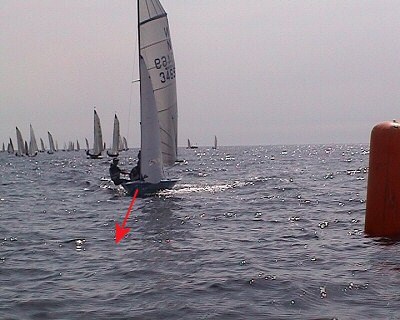
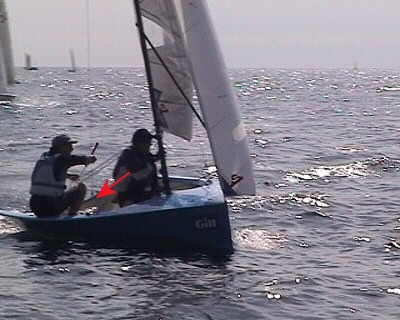
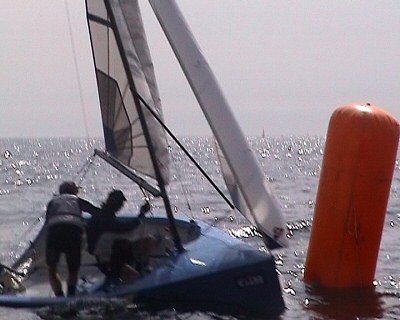
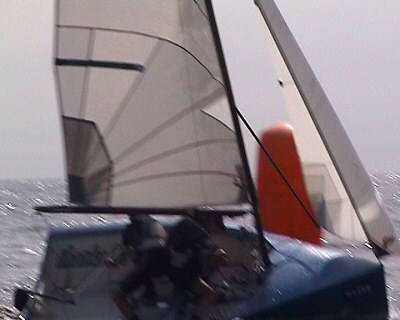
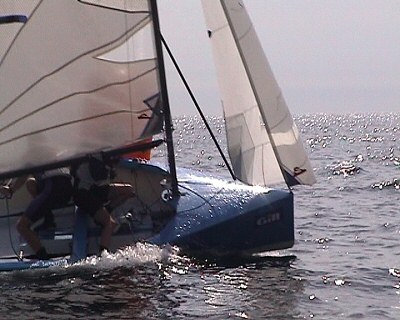
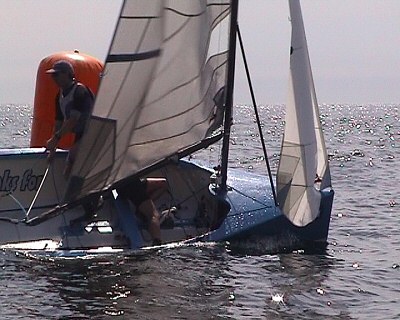
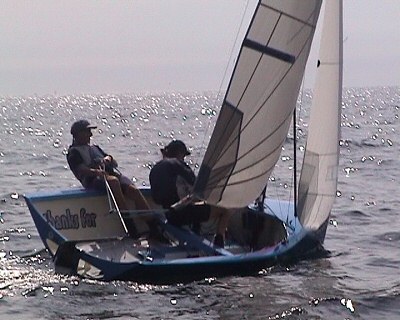
Starting the gybe Heel the boat to windward in order to initiate the turn. Crew slides a little to windward to help heel. If you do this right there should be little need to use the rudder to get the boat turning. Dip the gunwhale The crew moves more to the windward side. You should be aiming to roll the boat enough to dip the windward gunwhale into the water. You should avoid scooping water into the boat especially if your 12 is of the non-self draining variety. As the boat starts to turn you can use more rudder to increase the speed of the turn. Wait . . . keep the roll going Keep the boat heeling during the gybe, this keeps the boat turning and gravity assists the boom coming across. The crew should also help the boom across by pulling the kicker. Boom comes across The helm should move to the other side in one swift move as the boom comes across. The crew should move to compensate for the helm. It is most important that the helm is able to sit down on the new side. The crew starts to pull the jib across. Boom hits the new side The tiller should be in the middle as the boom hits the new side so the boat heads off in a straight line. Unlike in windy weather, when it's light it is helpful for the boat to be heeled when the boom hits the far side. The jib should now be eased out on the new side ready to fill Bring her up The helm should lean out to bring the boat back flat. The crew may need to help bring her up - but be certain the helm has reached the windward side first. Crew
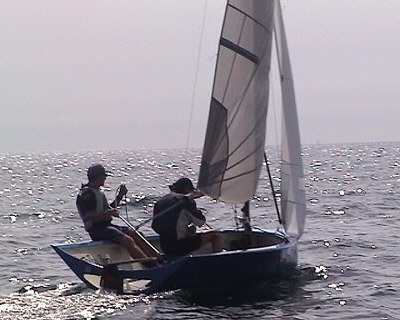
Coming out of the gybe The main and jib should come in together to accelerate the boat out of the gybe. The top batten should flick across as the helm pulls the mainsail in and brings the boat back upright. Common reason for the batten not flicking are:
Sail flat and fast Helm and crew move forwards as required to lift the transom Watch it on YouTube |