|


|
The 12 is similar to most 2 person dinghies but look out for the subtleties The principles of tacking are the same as other 2 person dinghies, however there are some subtleties to master with the 12. The 12 is short and the hull is quite rounded which leads to common pitfalls. It can be easy to:
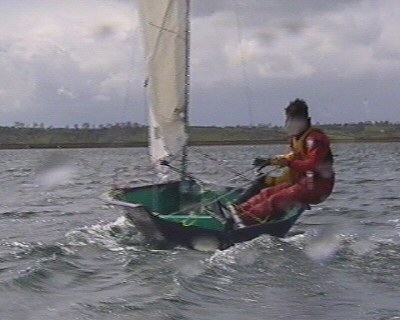
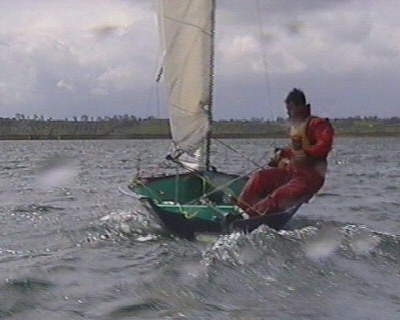
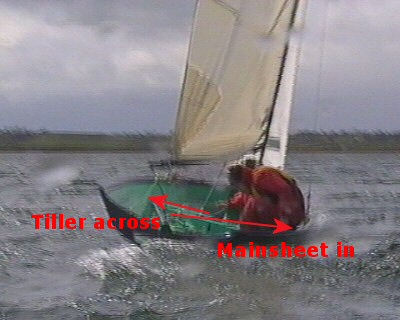
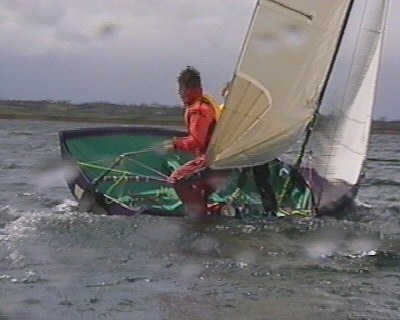
Follow these steps and you will be a tacking god! Mastering the transom main sheet Most 12s have a transom mainsheet, primarily because with only 12' of boat at your disposal it's best to get the sheet out of the crew's space. The transom main can result in hands getting mixed up initially, but persevere, it is generally the best option. Tack smoothly To start the tack push the tiller away - slowly at first. Don't force her around. It should feel like she wants to pull the tiller through rather than you forcing her. Don't move yet! Steering through the turn As the boat starts to turn you can use more rudder to steer around. The helm pulls a little more mainsail in to encourage the back of the boat around. Helm changes hands between sheet and tiller. This should be a natural movement. As the tiller extension is pushed away, the hand with the tiller extension should naturally pick up the sheet as it crosses. The crew should keep the jib tight in. Again don't move yet! Head to wind As she approaches head to wind the jib will back (assuming the crew has kept it in). The backed jib swings the front of the boat around more quickly. Watch out for capsizing to windward though. Now start to move across the boat.
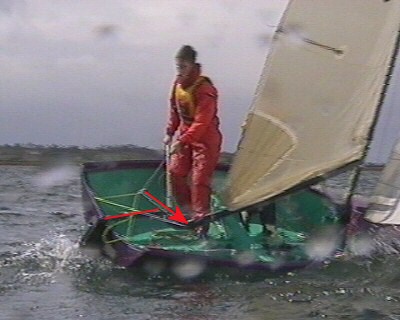
Wind fills on the new side As the boat goes though head to wind she should be heeled over and you should be dashing across. This is best done in a single continuous manoeuvre, with one change of footing. Using the centreboard case as a step can work well. The jib can start to come across to the new side. It should come across quickly so it doesn't flap. Completing the turn Ease out some mainsail. This helps the boat turn through the wind.
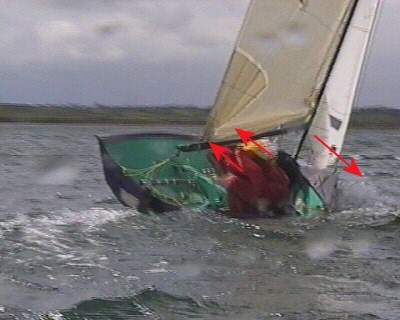
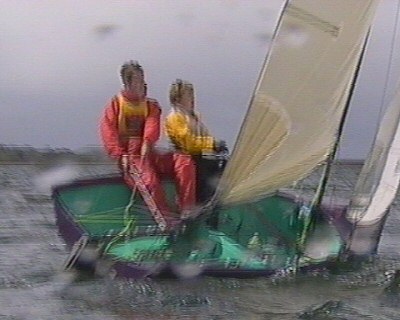
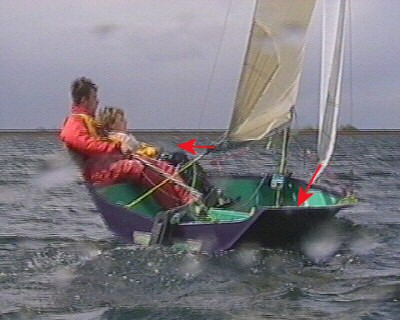
As soon as the boat has turned so she is on the new tack, put the tiller in the middle. Any over-steering here will have to be corrected later and will also lose you ground to windward. Close hauled on the new tack You should aim to come out of the tack exactly on the new close hauled course. If you have turned too much then you may need to compensate (as in the picture here). It is best to compensate before the helm and crew get to the side and apply the power. Prepare to bring her upright The boat should be on the new close hauled course with the jib and mainsail still eased The helm and crew should reach the side together and slide their feet into the toe straps Next it's time to apply the power Bring in the sails and accelerate Squeeze in the jib steadily at the same time as the mainsail.
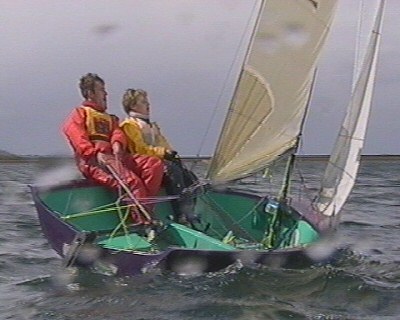
As the sails come in the helm and crew should hike out hard to bring the boat back upright. If both helm and crew bring the boat upright together and the main comes in at the same time then the top batten should flick. Sail flat and fast Now all you have to do is sail flat and fast and you'll be first at the windward mark! Watch it on YouTube |
 Tacking
 Basic techniques