|


|
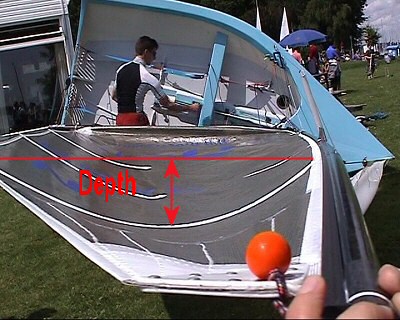
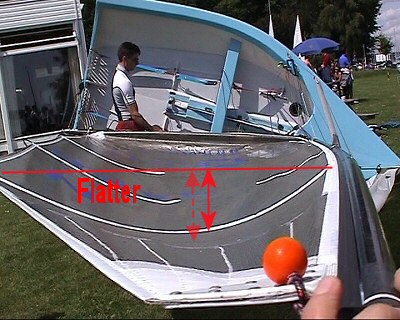
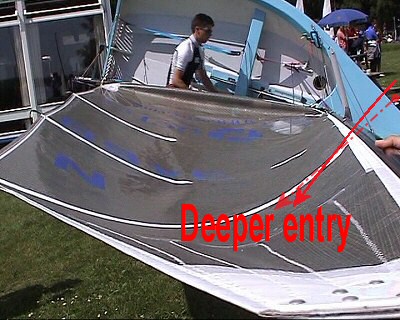
The 12 has a fantastically controllable rig. When adjusted correctly you'll be able to achieve the perfect sail shape through all the wind ranges tuned optimally for your weight. Few 12s are identical. There is a wide variety of kit including; sail makers, sail cuts, mast sections & materials. There is often variability even between masts of the same section. This makes it hard just to issue out standard numbers to make you go fast. Instead we try to show you what you are trying to achieve and the controls to get you there. Upwind - fine entry & flat sail To maximise your pointing ability you need a fine entry to the main sail. The degree of sail depth required will vary according to wind strength and your crew weight. The stronger the wind / the lighter the crew the flatter the sail needs to be. The following controls reduce the depth
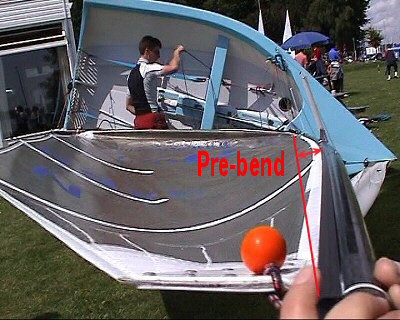
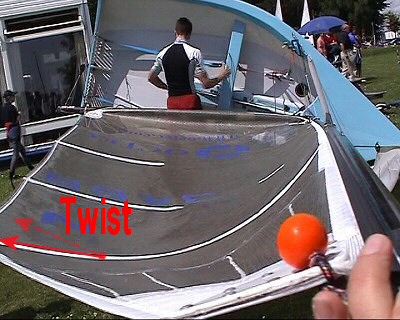
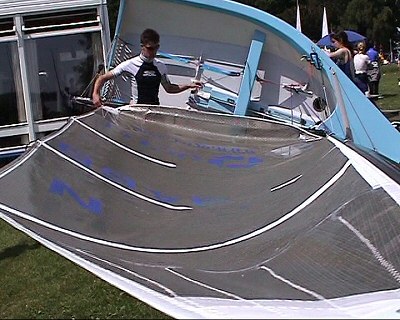
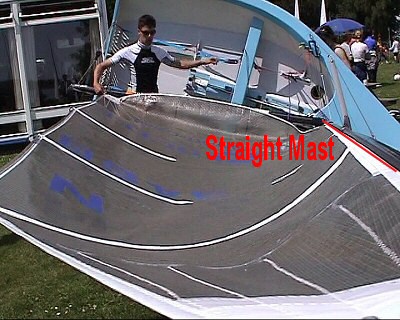
In this picture the shrouds are pulled on to achieve around 75mm of pre-bend and the kicker has been pulled on. Using the kicker The kicker needs to be constantly adjusted whilst sailing. In light winds it should be loose (just enough to prevent the boom lifting in the gusts), most mail sail leech tension should be done using the main sheet. It is very easy to hook the top of the sail with too much kicker. You should be aiming to let the top batten twist off to keep the top tell tale flying. In strong winds it is surprising how much kicker tension you can use, particularly on carbon masts. You are aiming to get the top tell tale stalling one in 5 seconds for maximum power. When to use the cunningham You may find you need a small amount of cunningham in light/ medium winds to get a the right sail shape, particularly on sails which have elasticated luffs.. As it gets windier you can de-power by pulling on more shroud tension, easing the lowers / mast ram, using more kicker and cunningham. The cunningham flattens the top of the sail so if you find the top batten inverting in breezy conditions then applying cunningham may help. Powering up In this picture the cunningham and shroud tension have been eased and the lowers/mast ram tightened resulting in a straighter mast and a powerful sail shape ideal for upwind in moderate conditions. Notice the sail entry at the mast is not as fine but this is a balance between pointing ability and power. Twist In light winds or choppy conditions you may want to open the leech of the sail to encourage the wind to flow over the sail more easily. In these conditions a tight leech will result in the sail stalling and a loss of power. The two main controls which affect twist are kicker and to a lesser degree mast bend.
In this picture the kicker has been eased and the mast is bent slightly. Powering up downwind On the reach and run you want a full sail for maximum power. This done by:
More downwind controls Some sailors also do the following:
In this picture the leeward shroud has been eased and lowers pulled on. Be careful to avoid inverting the mast though. Putting a mark on both the deck and mast to show when the mast is straight can be a good guide.
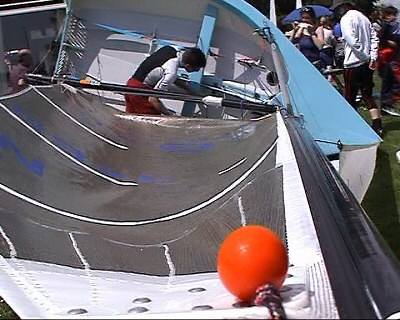
Easing the outhaul Easing the outhaul by 2 or 3 inches makes the sail full at the bottom. It is possible to have too full a sail so it best to have a stopper knot in the outhaul. This picture shows a nice even curvature in the sail from top to bottom. It you would like some step by step instruction for tuning your 12 then have a read of the full tuning guide.
|
 Tacking
 Basic techniques