

Topic: High speed reaching


|
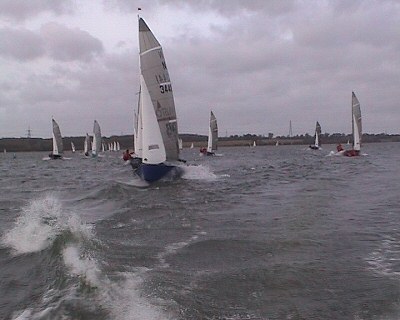
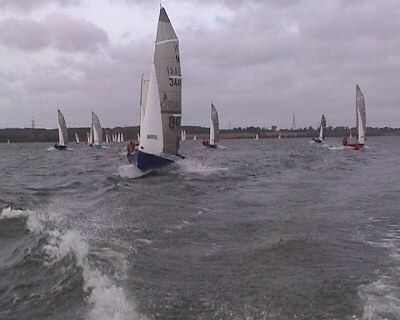
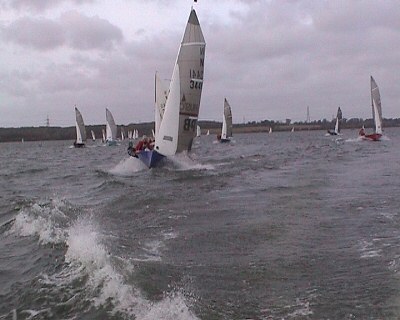
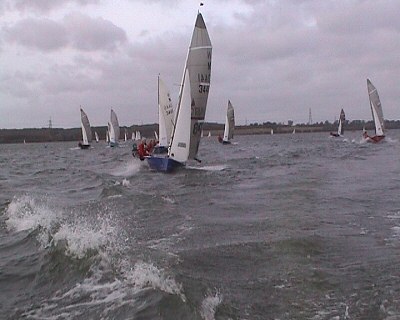
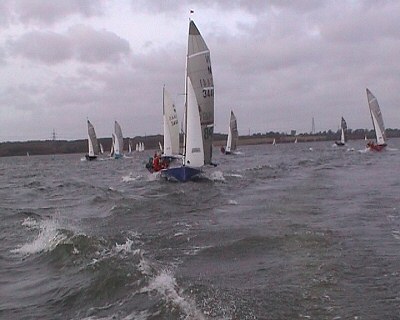
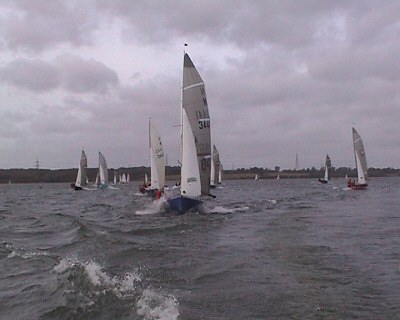
High speed reaching in a 12 is very exciting and often quite wet. When sailed properly you'll be surprised how fast you can go even relative to asymmetrics, particularly on a tight reach. Key points are:
Rig controls On the reach you need to get powered up as quickly as possible. That means as soon as you round the mark:
The only time you should vary from this is if conditions are really scary (in your opinion) or you are going to engage in some rapid tactical manoeuvres after the mark. Responding to gusts 12s accelerate rapidly and you need to get every last ounce of speed out of every gust. To do this you need to anticipate the gusts. Crews can help here by looking backwards for gusts and counting down the seconds until it will hit. Describing what's happening to the other boats around will also help.
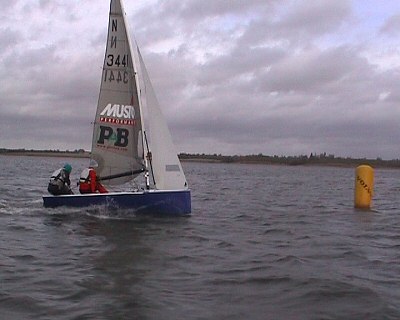
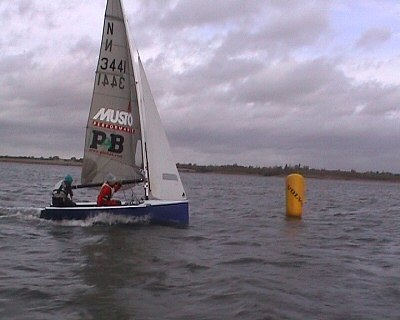
Before the gust hits Before the gust hits, the helm should be ready to bear away and both helm and crew should be ready to ease the sails and hike out. Any leeward heel induced at this point is lost speed. As the gust hits The crew should come up to windward to keep the boat flat. In fact a little windward heel can often be good to help the boat bear away and accelerate. Both helm and crew may pump the sails (within the rules) to induce planing. Riding the wave If there are waves around you can use these to help promote planing, to increase your speed or to work the boat lower to the next mark. To pick up the wave, as you feel the boat lift, pump the sails and hike hard. You may need to move your body forwards to help tip the boat over the crest of the wave. Often the boat will initially slow down and pressure will mount on the sails so you need to respond with outward body movement to keep the boat flat. Riding high or low? If you want to work the boat low with the waves towards the next mark, bear off to follow the face of the wave low. If you're going for speed steer to keep on the wave, bearing away if you're going faster than the wave and heading up if the wave is beating you. Try and avoid using lots of rudder as this will slow you down, use body movement to help steer instead. Helm and crew need to co-ordinate their movements and so communication is important. Dangly Pole The dangly pole was invented for reaching. It can be flown to leeward to keep the jib leech tight and get maximum air flow through the slot. On the reach the crew should play both the dangly pole string and jib sheet to keep the tell tales flying. If the nose starts to go down a well timed pump of the jib can help rescue a potential nose dive. Note the good trim of the boat in this picture: the crew and helm are well back and the nose is out of the water. Getting ready for the gybe With any luck the helm will have sailed slightly high of the gybe mark during the reach and can bear off on the final approach. This allows the crew to come in off the side deck and get the controls back on. Setting controls for the gybe If gybing onto another downwind leg the crew needs to:
If gybing and then heading back upwind the crew needs to:
|