|


|
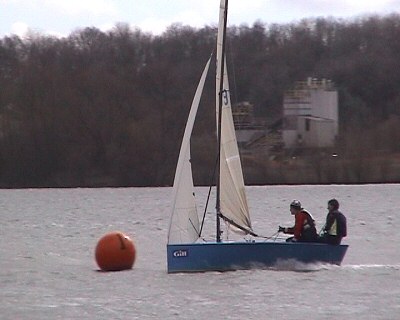
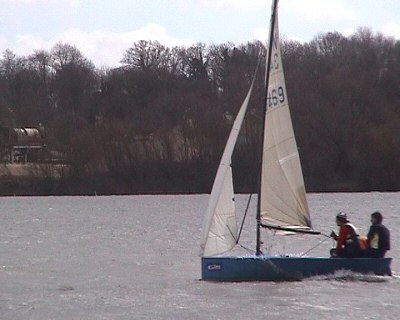
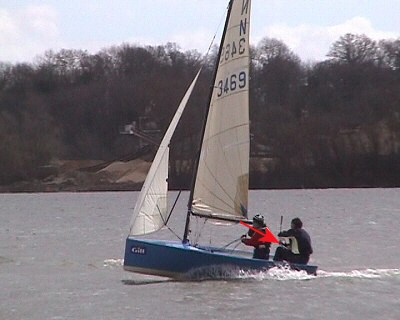
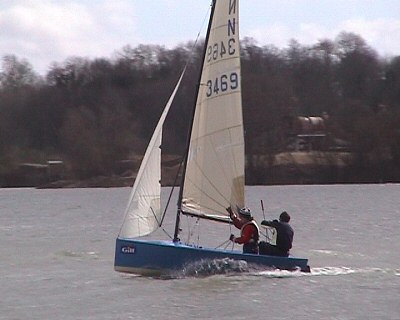
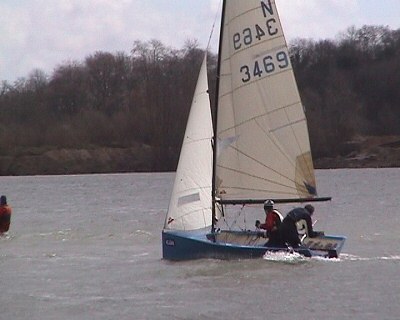
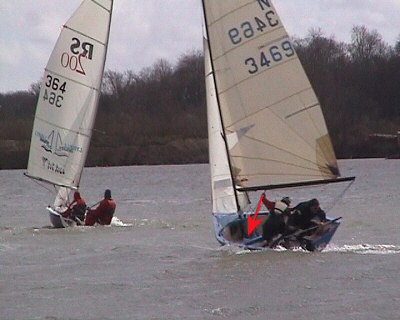
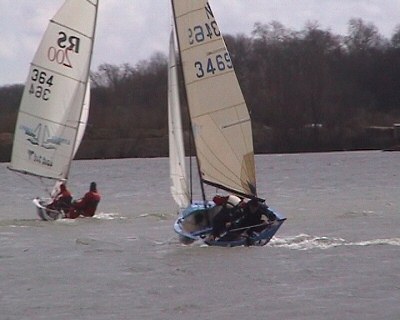
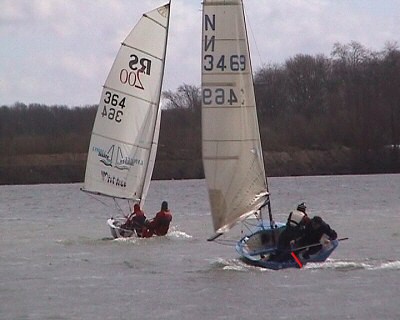
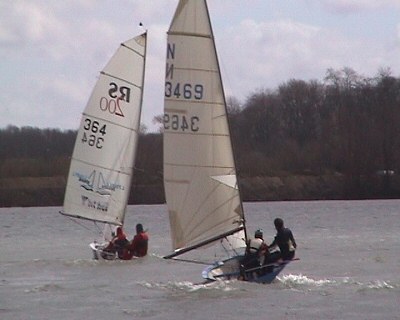
Gybing in strong winds can be a challenge Getting a 12 through a gybe in strong winds is probably the most challenging bit of boat handling you are likely to experience. Don't be put off if you capsize a few times initially, to get it right consistently will take quite a bit of practice. And if it is really wild then don't be afraid to tack around instead. The golden rules are:
On the approach Look around for gusts. You don't want to gybe just as a gust hits. Don't be afraid to go past the mark if it's not the right moment (as long as there is no one on the outside).
Preparation Helm Helm takes in some mainsheet so the sail doesn't have so far to travel. This also provides some sideways stability when coming out of the gybe. Crew
Change hands Getting the mainsheet and tiller mixed up is often a problem. There are different techniques for changing hands. Most helms like to change hands before the gybe, some prefer to hold both the tiller and mainsheet in one hand. Try both approaches and see what works for you. Bear away Make sure the boat is flat before you start to turn. The 12 will never gybe heeled to leeward:the rudder will stall and you'll capsize. Use just a little rudder to start the turn. As the turn is in progress more rudder can be used. The quicker you are going the less movement you need. Sail a nice smooth arc going into the gybe, this keeps the speed on and the pressure off. Helm starts to cross to keep the boat flat. Encourage the boom across The crew should pull the boom across with the kicker and the helm should give the main sheet a tug. If the gybe does hesitate (boom won't come across) then the best recovery plan is to bail out. Head back onto a reach, get your speed up and try again. The reasons for the gybe hesitating are usually:
Boom crosses If your preparation is good the boom will flick across very quickly. Be sure to duck! The crew should be in the middle of boat ready to correct for the helm The helm should be on their way towards the other side as the boom comes across Boom hits the new side The tiller should be in the middle as the boom hits the new side so the boat heads off in a straight line. Common issues caused by the tiller not being in the middle or the boat being heeled as the boom hits are:
One good technique is for the helm to put the tiller extension on the deck on the new side and press down on to it while moving on to the new side. This locks the tiller in the middle. Get the boat flat The helm should get up on deck and the crew should then balance the helm and make any minor corrections to get the boat flat and moving.
Hooray! You've done it, off down the reach we go. Watch it on YouTube |
 Tacking
 Basic techniques